
professional culinary

15 week full-time professional program focusing on techniques, ingredients, global cuisines, creativity, modern thinking, and mindful values.
Intake Dates
January 11, 2027
September 6, 2027
January 2028
Culinary is Monday to Friday 830am-330pm

Create, Not Just Replicate.
We recognize today’s chefs are asked to wear many hats: to be artisans, innovators, leaders, problem solvers, and a greater voice for tomorrow’s food sensibilities and challenges. Which is why we exercise your thinking and creative muscles beyond your own expectations. This is, after all, what a great education does.


our culture
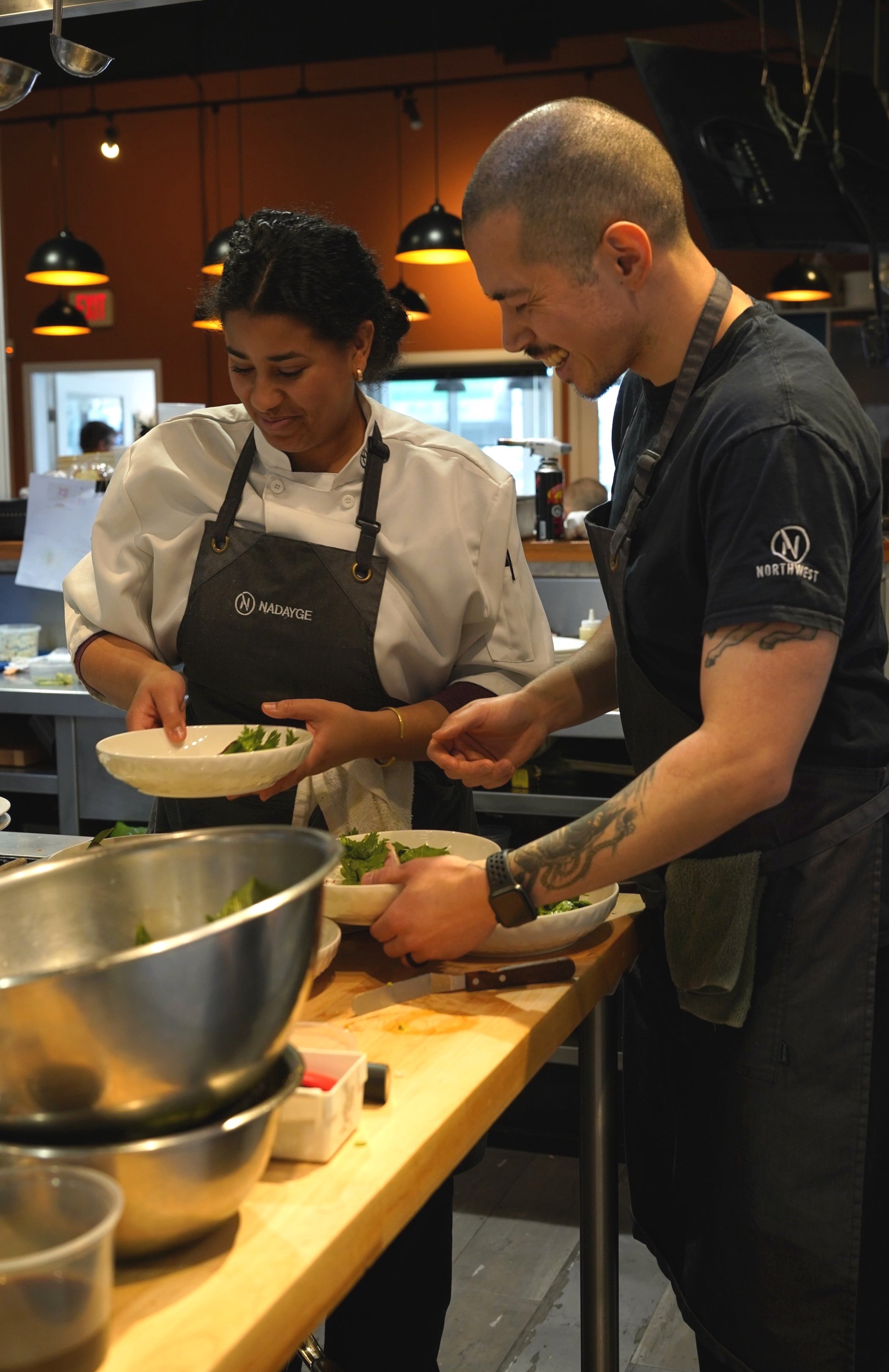
Northwest Culinary Academy is a school that prides itself on promoting a progressive, forward-thinking culture that’s more fitting for the contemporary professional kitchen. Unlike traditional culinary institutions, we’re committed to breaking away from the “yes chef” mentality, fostering an environment of respect towards the craft, the creative process, technical skill, discipline, and most importantly, respect for each other. Come with an open mind so we can focus on your individual learning experience and help you become the best version of you.
curriculum
In this course we will cover an extensive array of techniques and work with an incredible amount of ingredients.
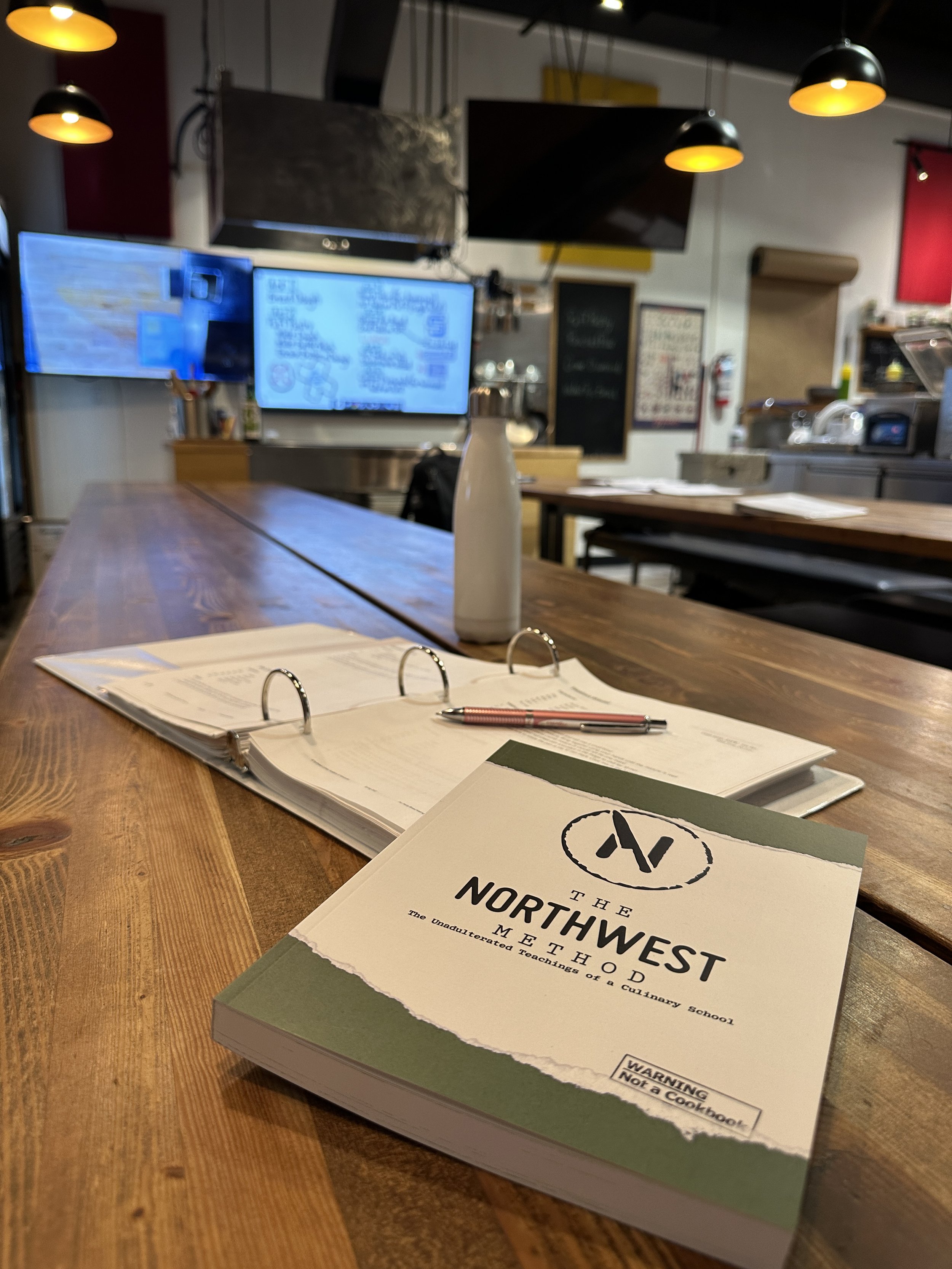
The world of cooking is constantly changing. Our curriculum has been mindfully built to give you the ability to navigate the contemporary kitchen, wherever your culinary journey takes you.
Our goal is to provide an education that's technically sound and suited to the modern culinary mind. At Northwest, we update and improve the curriculum every semester in order to provide our students with a learning experience that's engaging and current. Technique is the common thread that ties it all together.
The focus of this program is to equip you with the essential skills and knowledge so you can bring your vision to life. Each individual, each person, has their own creative spark. Our style of education is best suited to those who are looking to dig deep and challenge themselves to find that spark. Welcome to a profession of infinite interpretations.
Some of what we will cover
Garde Manger (knife skills, salads, canapes)
Stocks & Soups
Vegetables
Art of Sandwiches
Grains and Starches
Legumes and Soy Products
Eggs and Poultry
Fish and Crustaceans
Plating Techniques
Menu Design
Food Costing/Starting a Business
Fermentation
Knife Sharpening
Sous Vide
Modernist Techniques
Pasta/Dumplings/Asian Noodles
Spices
Plant-based Cuisine
Pig/Duck/Chicken Butchery
French Classics
Italy & Spain
Middle East, India, Latino and Asian Cuisines
Pastry Fundamentals
Bread Fundamentals
Classic and Modern Sauces
Plant-based cooking
Nutritional principles of balanced cooking and eating
Farm-to-Table
Butter/Cheese Making
Wine Tasting
Charcuterie
Fair Kitchen Practices
Red Seal Level 1 Theory/Practical Exams*
Practical Quizzes
Creating Your Portfolio
Weekly Student Menu Development Projects
Stages at local restaurants/hotels/catering companies
Food Truck Practical Mid-Term
Multi Course Final Practical Project
*Culinary students with a BC address qualify for Level I of their Red Seal after completing a practical, theory exam and 1000 industry hours (the course contributes 300 hours towards this).

a typical day
Each day focuses on a specific theme with specific objectives..
We start on time, right on the dot.

Each day begins with our chef instructors communicating the day's objectives with the class. We organize these objectives into multiple acts, allowing us to maximize our time and number of learning opportunities so no moment is wasted.
For each act, we'll demonstrate the techniques and dishes, cover the theory, and answer any questions. Then the students head into the kitchen to follow the same practices with our instructors guiding them when needed. Once that act is completed, we all return for the next demonstration and repeat the process together.
Every day will challenge you with all the necessary hands-on tasks and thinking that makes great cooking work - cleaning, preparation and organization, note-taking, team communication, dancing within one’s station, questions and answers, it's all meant to build high professional standards and expectations.
Although students work in teams at a station, the majority of cooking and dish execution is done individually. This helps each individual see the process from start to finish.
From a learning standpoint, this allows us to understand the educational needs of each person as well. With a maximum of 24 students per semester and 3 instructors in the kitchen at a time, this 8:1 ratio means we can provide more attention to help you progress.

Mid-Term Pop-Up
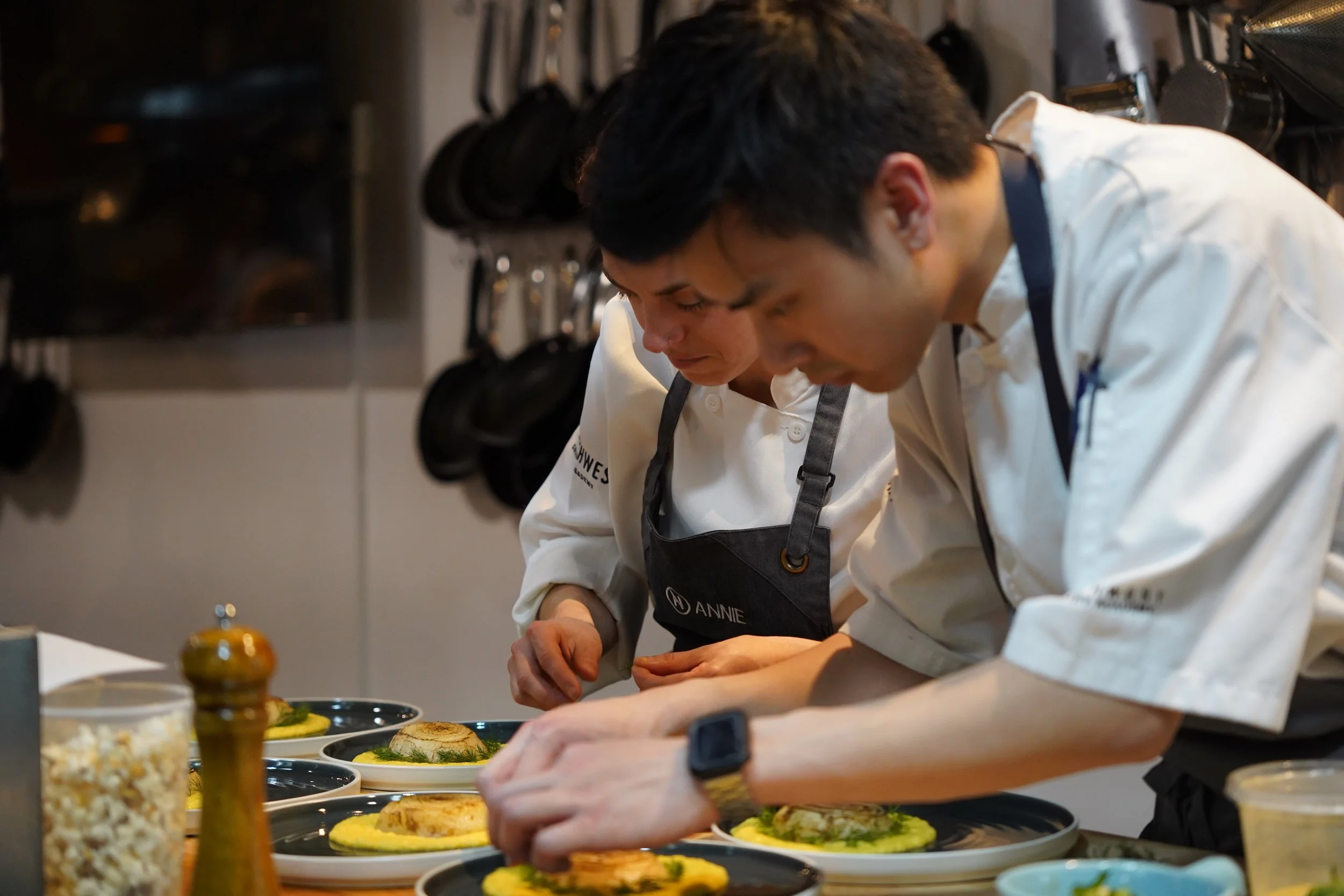
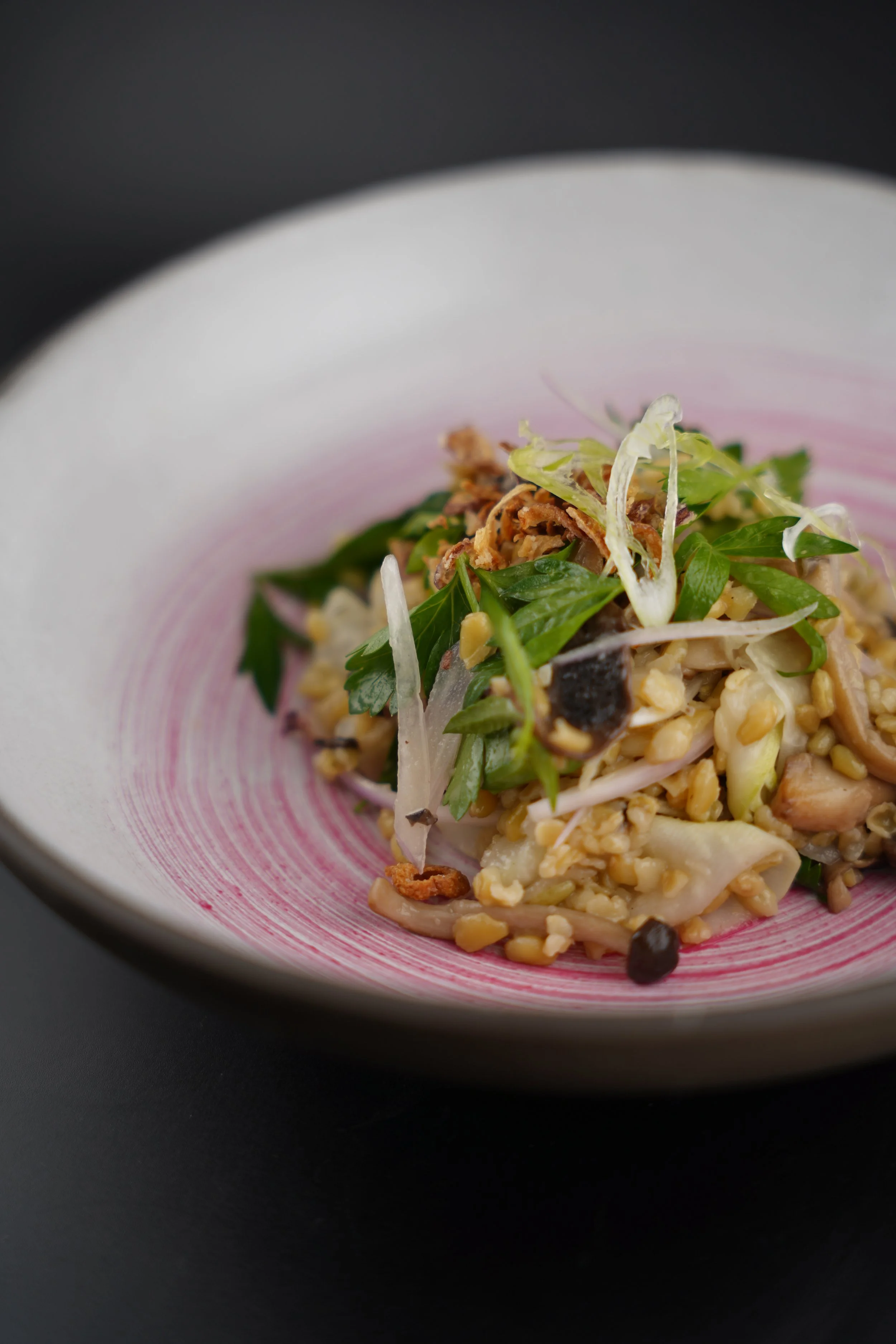
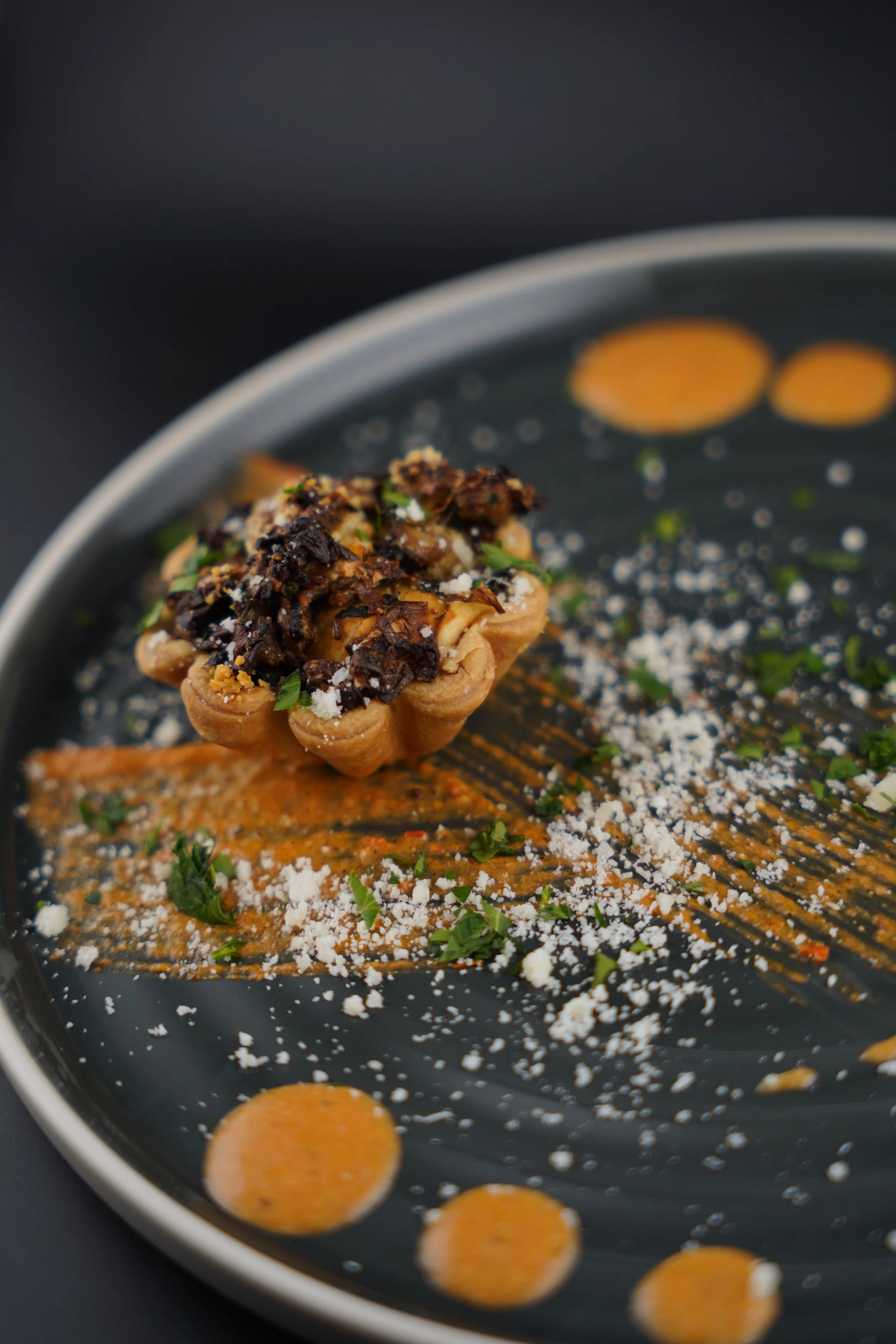
At Northwest, our students take their skills beyond the classroom with a series of three pop-up dining events. The first pop-up serves as the mid-term practical exam: a curated menu featuring dishes the students have mastered during the term, highlighting their fundamental techniques and execution. The next two pop-ups give students the chance to design and create their own original dishes, offering a preview of their creativity and style as they prepare for the high-stakes final practical exams.

Food Truck
project
For our food truck project, our students engage in a 3-day long exercise where they create their own "food truck" to simulate the process of starting a business. They'll conceptualize their own food truck, design their menu, create their own dishes, and practice food costing. On the final day, the kitchen space is transformed into a food truck gallery where invited guests can order food from the students' businesses.


The Final Service
The final service is an intensive practical exam that’s the culmination of all the skills learned in our professional program.
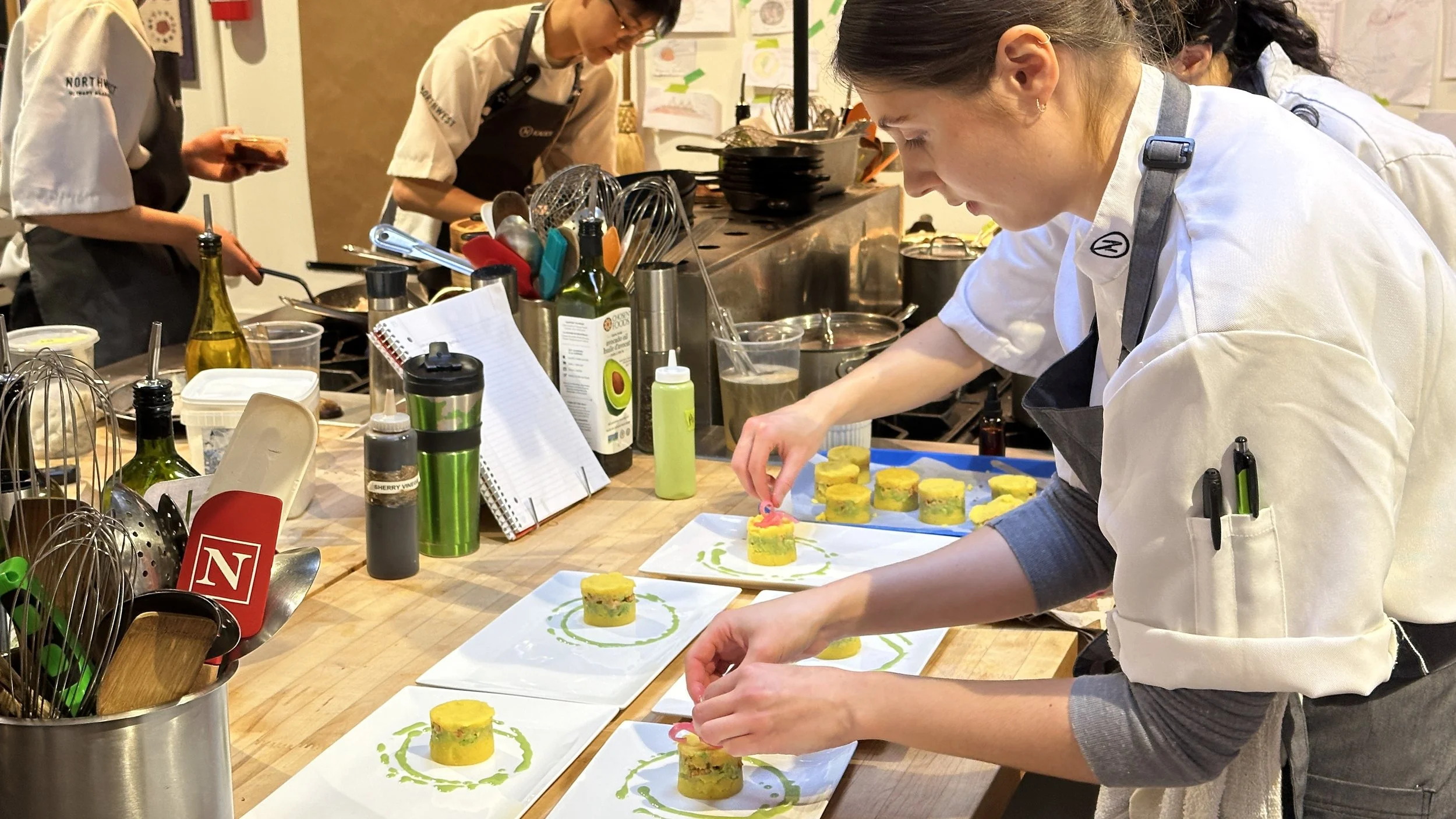
The final service is an intensive practical exam where our students work individually and serve a 6 course menu to invited guests with the support of a "sous chef". Showcasing their skills and sharing their artistry with their own invited guests..
It’s a comprehensive process that explores the technical and creative aspects of menu planning and experimentation. This all starts with individual dish development, as our instructors coach the teams through the evolution of their concepts.
Our graduates often describe this as a highlight of their culinary education and an experience that was a key stepping-stone towards their personal evolution.


our space
Not all culinary schools come from the same recipe book
Our kitchens are warm, inviting spaces, a departure from the fluorescent lights and maroon quarry tiles of a typical industrial setting. Theory and practical go hand-in-hand so everything is done in the kitchen. Part art studio and workshop, part classroom, all craft.
CHEF-OWNED. This means teachers with more skin in the game, who are committed to their students and their workplace beyond a teacher’s contract. It also means learning your instructors’ commitment to leadership and smart operational-business practices. Learning from chef-instructors is one thing: learning from chef-owners is another.
STUDENT-DRIVEN. We screen, first and foremost, for smart learners. And by communicating with them as adults, we evolve our school collaboratively. It is what the best teachers, chefs, and owners do: they listen.
8:1 STUDENT-TEACHER RATIO. There are always three instructors on the floor. And on key days (the first week of class, menu developments, mid-term, and final practicals) all the instructors are available for coaching. In effect, that means on the most important days students will have a 8:1 ratio.
REALISTIC TUITION. Some ask why our tuition is lower than most private culinary schools. The real question is why are they so expensive? As a chef-owned school, we obviously have a different business model. All but one of us work in the classroom for your tuition money. We don't have a massive administration. And that means you get much more attention and quality ingredients for your education money.
CREATIVITY-FOCUSED. Some schools abide by the “do it the chef’s way or highway” philosophy, limiting creativity and spontaneity. All schools will teach you techniques, and indeed techniques are vital. But chefs are born to think beyond rules and formulas. They bend them using their own senses and ideas. We discovered that students apply techniques with greater focus, motivation, and craft when we put them in more creative situations. It is a challenging teaching method, but it pushes the mind, hands, and confidence much further along.